

Written by
Vertika Sarkari
Mind Mirror
“What do you want to do in life?” can be difficult to answer, especially when a young person is still discovering what different careers involve. Career guidance for parents can begin with smaller questions that invite examples rather than demand a final decision.
The aim is to understand how your child thinks and what they want to explore. You can discuss practical constraints without making every conversation feel like an interview.
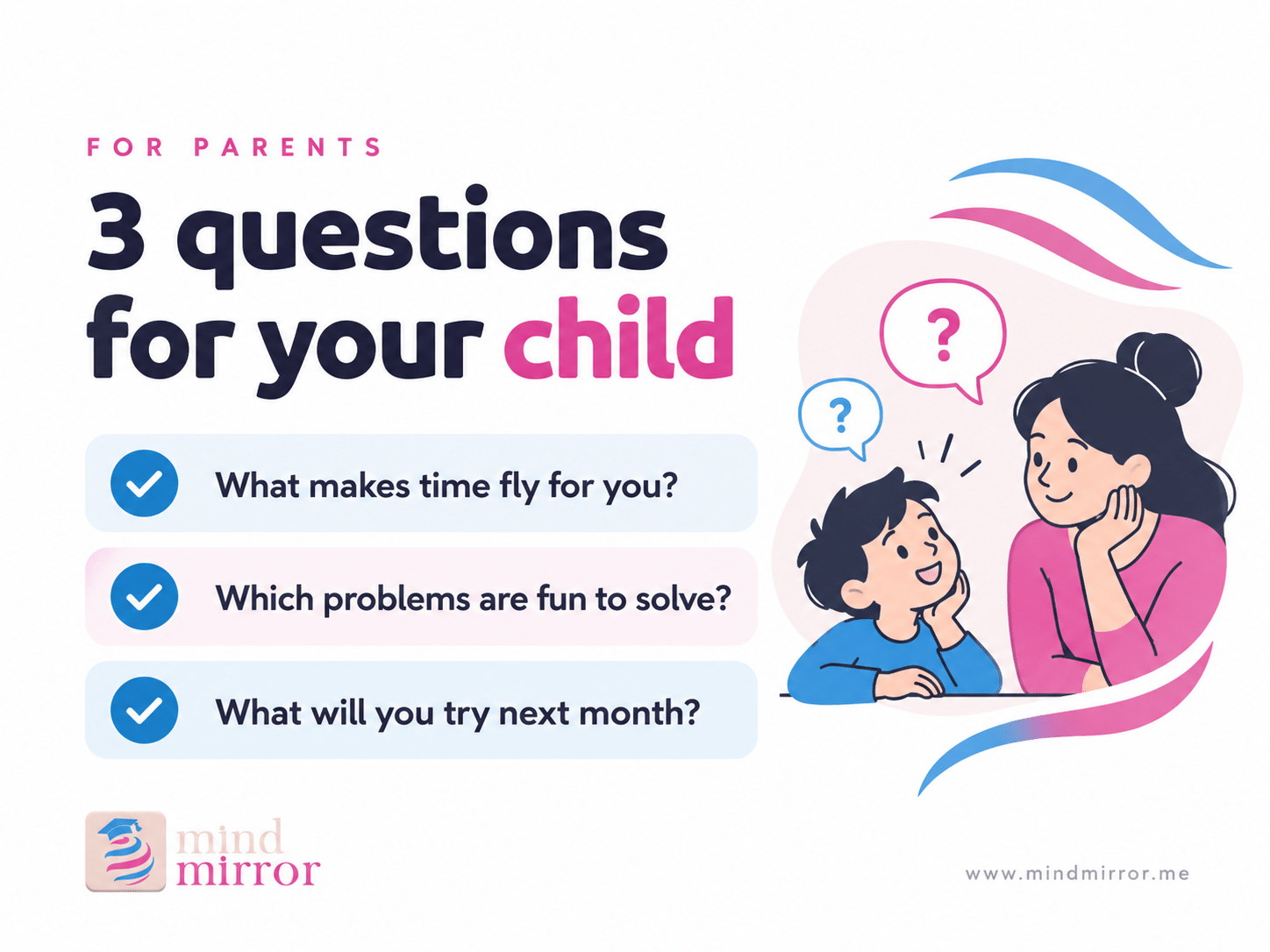
Question 1: Which activity held your attention this week?
Ask about school, hobbies, conversations or a responsibility at home. If the answer is “nothing”, offer time to think or share an observation: “You seemed interested when you were editing that video. Which part did you enjoy?”
Follow the activity into its details. Was it choosing a story, solving a technical issue, arranging the visuals or showing the finished work to people? Different enjoyable parts can suggest different directions for exploration. Avoid jumping immediately from one answer to a career label.
Question 2: What kinds of problems do you enjoy solving?
Some students enjoy finding a numerical answer. Others like improving an object, resolving a disagreement, organising information or imagining a new approach. Ask for a recent example and what made it satisfying.
You can also ask which part was frustrating. That answer may reveal a skill to practise, a task they dislike or a missing resource. Listen for the student’s account before offering your own interpretation.
Question 3: What would you like to try next month?
Move from discussion to a manageable experience. Possibilities include an introductory class, a small project, a conversation with a professional or helping with an appropriate community activity. Choose something with a clear purpose and a limited time commitment.
Agree on what the student hopes to learn. “I want to find out whether I enjoy interviewing people” is more useful than “This will decide my career”. After the activity, discuss what they enjoyed, found difficult and want to explore further.
How to listen without taking over
Let your child finish before evaluating the idea. Repeat the main point in your own words and ask whether you understood correctly. If you are worried about cost, eligibility or opportunity, name the concern precisely and agree to investigate it together.
For example: “I can see why this course interests you. We need to understand its curriculum and the full cost. Shall we compare two institutions this weekend?” This keeps a real constraint in the conversation without dismissing the interest.
When parents and children disagree
Separate the disagreement into smaller questions. Are you disagreeing about the student’s interests, the daily work, the training route, the affordability or the available evidence? A specific question is easier to research than a general argument about whether a career is good.
Each person can write what they know, what they assume and what would change their view. Then select one fact to verify. A career counsellor can help structure the discussion when assumptions or repeated comparisons make it difficult to move forward.
Try a short weekly check-in
Set aside a brief, calm time. Ask one question, listen and agree on one next step. Leave room for “I don’t know yet”. The purpose is to build a habit of exploration and trust, with decisions becoming more specific as the evidence improves.
Start your career assessment with Mind Mirror as a starting point for a student-and-parent conversation about interests, strengths and future options.