

Written by
Vertika Sarkari
Mind Mirror
A psychometric career assessment can introduce useful language for discussing interests, preferences and abilities. Its value depends on the quality of the tool, the way it is used and the conversation that follows. A report should help you investigate possibilities, rather than close them prematurely.
Before taking an assessment, ask what it measures. An interest inventory, a personality questionnaire and an aptitude assessment are not interchangeable. Their results should be interpreted in the context of your age, experiences, education and goals.
What RIASEC helps you explore
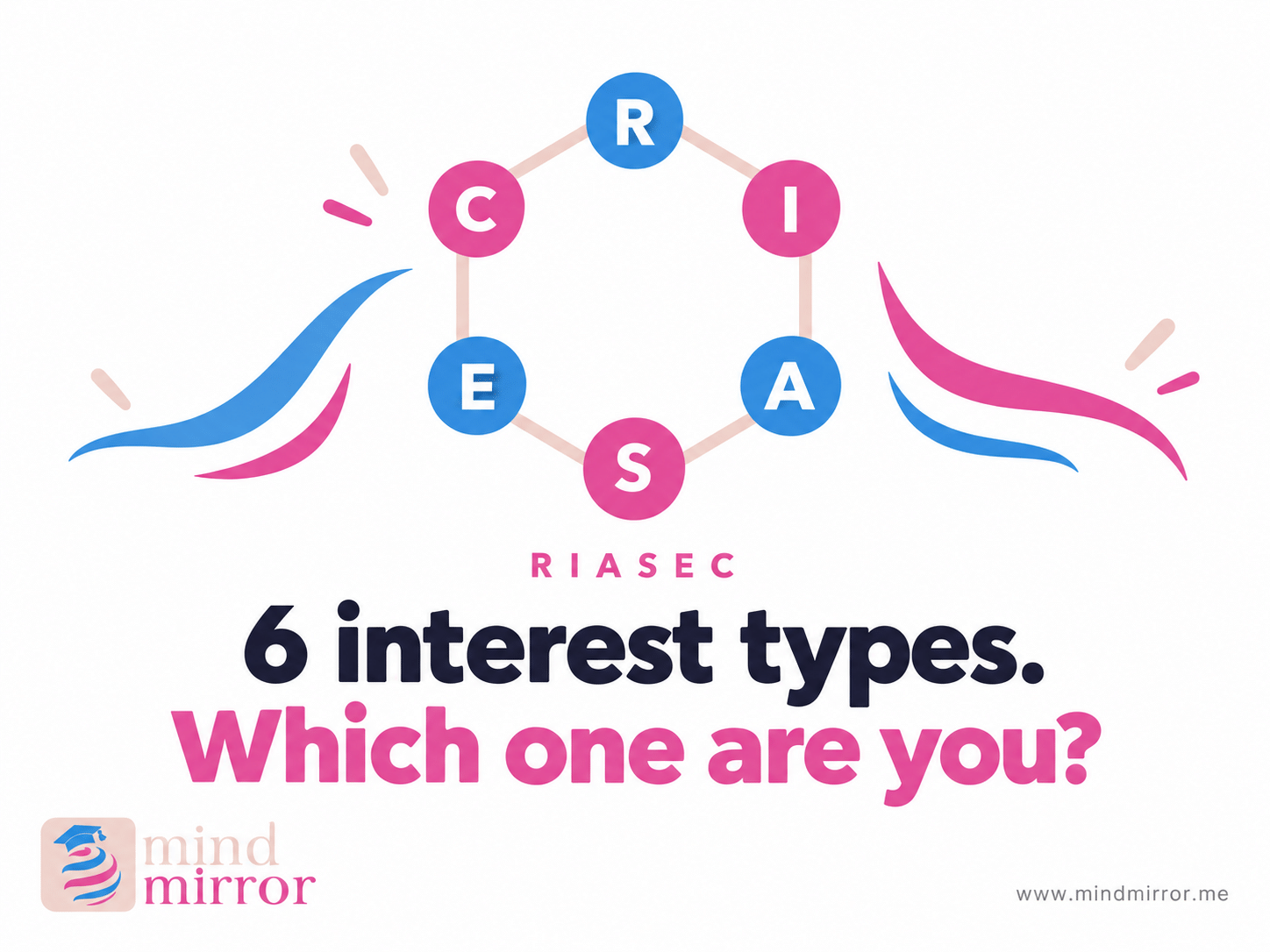
RIASEC is a framework for occupational interests associated with John Holland’s work. The O*NET Interest Profiler uses six interest areas to support career exploration:
- Realistic: practical activities involving tools, materials or physical tasks.
- Investigative: analysing, researching and understanding problems.
- Artistic: creating, expressing ideas and working with design or language.
- Social: helping, teaching and supporting people.
- Enterprising: influencing, leading and pursuing business activities.
- Conventional: organising information and working with structured processes.
A profile can contain several strong interests. Treat the pattern as a starting point for comparing activities; it does not demonstrate that you already have the skills for a particular job.
Ask for examples behind the scores
If a result suggests an investigative interest, discuss a time you enjoyed examining evidence or solving an unfamiliar problem. If it suggests a social interest, consider whether you enjoy teaching, listening, teamwork or a different people-focused activity.
Sometimes a result feels unfamiliar because you have had little exposure to the activities described. Sometimes your understanding of a question differs from what the questionnaire intended. Bring these reactions to the discussion instead of accepting or rejecting the whole report immediately.
Keep interests and aptitude separate
You can enjoy an activity while still developing the skills to do it well. You can also perform a task capably without wanting to spend much of your working life on it. A useful career conversation makes room for both observations.
Ask how any aptitude result was obtained, what comparison group was used and which conclusions the assessment can reasonably support. One score should not be used to promise admission, income or career success. It should inform the next questions alongside other evidence.
Turn the report into a short experiment
Choose two possible fields suggested by the conversation. For each, identify a real task you can try at an appropriate beginner level. Write down what you expect to enjoy before starting, then record what actually happened.
For instance, someone interested in helping and explaining might create a short lesson for a younger student. Afterwards, consider whether the enjoyable part was researching the topic, making the material, teaching it or responding to questions. That distinction can guide further exploration.
What to ask in the feedback session
- Which findings are well supported, and which need more evidence?
- Where does the report agree or disagree with my lived experience?
- What options should I explore, rather than select immediately?
- Which skills or experiences would help me make the next decision?
At Mind Mirror, assessment results belong within a wider career conversation. Start your career assessment with Mind Mirror, then use the results alongside your experiences and goals to explore your next step.