

Written by
Vertika Sarkari
Mind Mirror
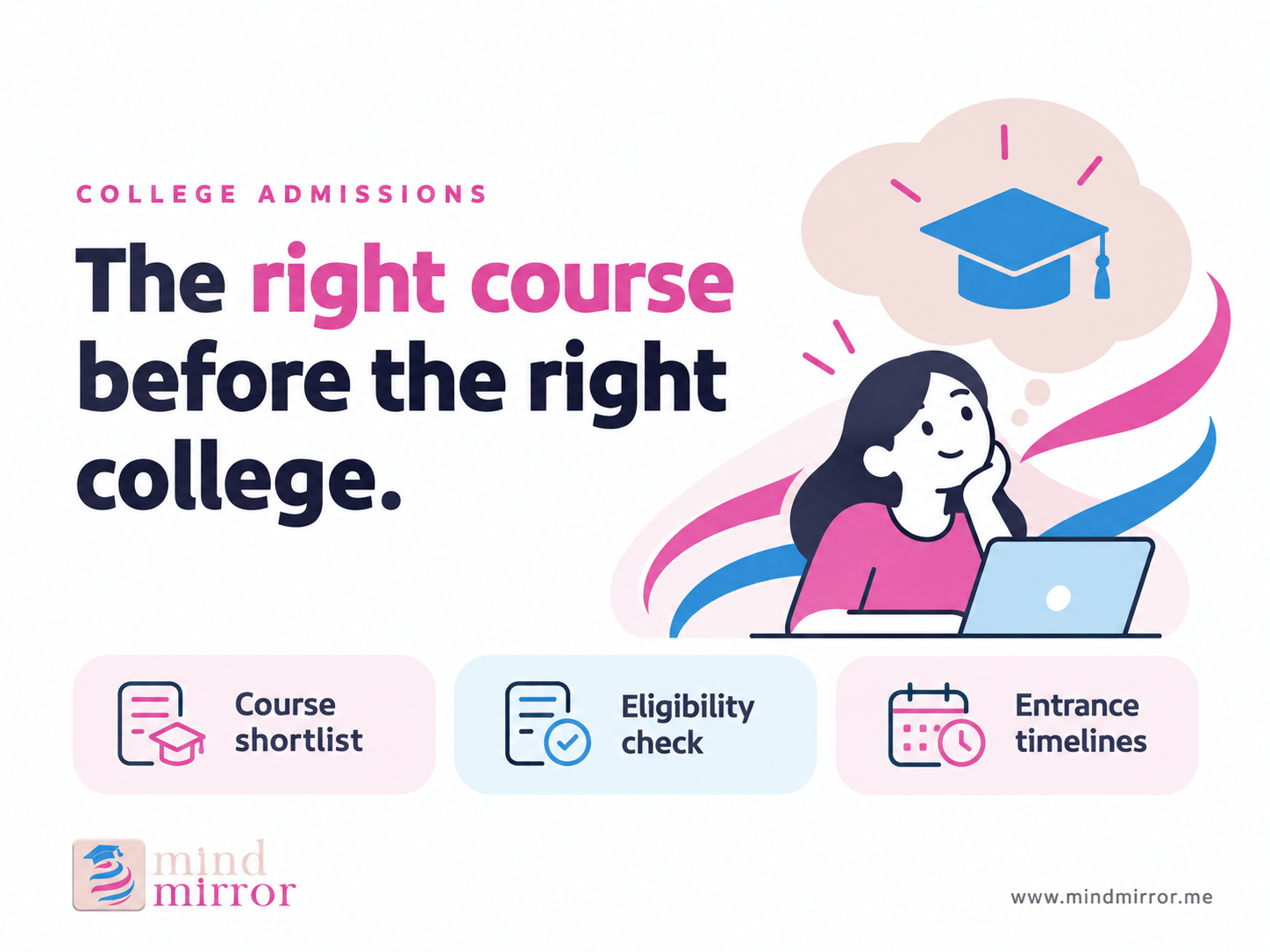
A well-known college name can make an option feel settled before the student has read the curriculum. College admissions guidance is more useful when course fit and practical requirements come first. Reputation can then be considered alongside the evidence that matters to the individual student.
Start with a clear question: what do you want to learn, and what experiences would help you move towards your current goals? You do not need certainty about your entire working life to make a thoughtful course shortlist.
Read what you will actually study
Compare required modules, optional subjects, assessment methods and practical components. Two courses with similar names may place different emphasis on theory, projects, laboratory work or professional preparation.
Note which parts interest you and which you do not yet understand. Ask the institution about unclear details. If possible, speak with current students about the ordinary week rather than only the most impressive event or placement story.
Create an eligibility record
For every shortlisted course, record the current official admission page and the date you checked it. Include required subjects, minimum criteria, entrance tests, portfolio or interview requirements, and any separate application stages.
Keep eligibility distinct from selection. Meeting minimum requirements does not guarantee a place. Equally, taking an entrance test may not complete the application process for every institution that uses its results.
Build one application calendar
Use a single tracker for registration, test dates, document preparation, applications, interviews and decisions. Give each task an owner. A student can own the application while a parent helps with agreed supporting documents or logistical arrangements.
Set an internal target before the official deadline. That leaves time to resolve missing information and check submissions. Record confirmation numbers and submitted copies so the family can verify what has been completed.
Compare the full commitment
Look beyond the first-year tuition figure. Ask about later fees, accommodation, travel, equipment, deposits and other compulsory costs. Use current institutional information and document any assumptions rather than relying on an informal estimate.
Also consider location, travel time, accessibility, teaching support and the learning environment. These factors affect the student’s everyday experience and can matter as much as an attractive brochure.
Evaluate career claims carefully
When reviewing outcomes, ask which student group a figure describes, which period it covers and how it was calculated. A headline salary or one success story is not a forecast for an individual applicant.
Look for opportunities to develop relevant skills, receive feedback and build work samples. Ask how practical experiences are arranged and what students are expected to do themselves. These questions make comparisons more meaningful.
Use a decision table rather than a popularity contest
Choose a small set of criteria that matter to the family: curriculum, eligibility, affordability, learning support and relevant opportunities. Write evidence under each criterion for each course. Mark unknowns clearly and investigate them before making commitments.
A good shortlist includes options you would genuinely consider, not merely names added as backups. Start your career assessment with Mind Mirror to begin exploring your fit, then check course eligibility and application requirements separately.