

Written by
Vertika Sarkari
Mind Mirror
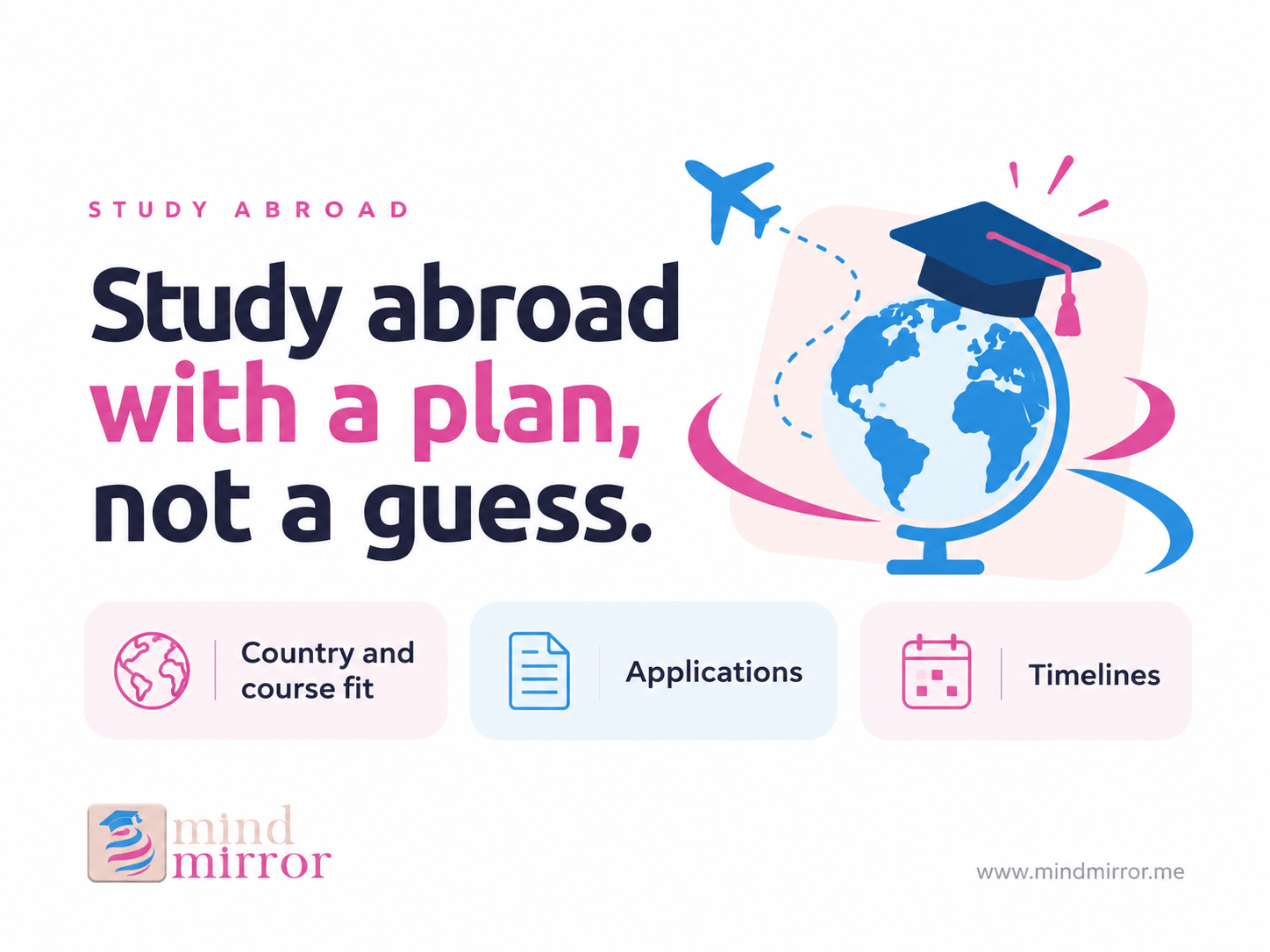
Study abroad planning often begins with a destination. A more useful first step is to identify what you want to study and why an overseas course could support that goal. The best shortlist for one student may be unsuitable for another.
Before comparing countries or universities, write a short statement of purpose for your own planning: the subject you want to explore, the skills you want to develop and the experiences you hope to gain. This is a working note, not a final application essay.
Compare courses at the curriculum level
Read required modules, electives, project opportunities and assessment methods. Check whether the course is introductory, specialised or intended for students with a particular academic background. A familiar course title does not guarantee familiar content.
Where information is unclear, ask the institution directly. Record the answer and its source. Conversations with current students can provide context, but formal requirements should come from the university’s current published information.
Build a complete cost worksheet
List tuition, compulsory fees, accommodation, living expenses, travel, insurance and course-related equipment. Separate confirmed figures from estimates and record the currency and date used for each estimate.
Prepare an option that remains workable without unconfirmed scholarships or employment income. If you are considering financial commitments, discuss the details with appropriate advisers and the relevant providers. The purpose of the worksheet is to make assumptions visible before the family commits.
Map the application requirements
For each programme, record academic prerequisites, language evidence where required, references, written statements, portfolios and deadlines. Different courses at the same institution may ask for different material.
Work backwards from the earliest deadline. Allow time to request transcripts, approach referees and revise written work. Keep the application student’s own: support can improve organisation and clarity, but examples and claims should accurately reflect their experience.
Check rules from the right sources
Admission, immigration and work conditions are separate matters. Check current admission requirements with the institution and immigration requirements with the relevant government authority. Do not rely on a friend’s experience or an old social post for rules that may have changed.
Save the official source and the date checked in your planning sheet. If an important requirement is unclear, obtain clarification before relying on it. A course offer should not be treated as confirmation of every later step.
Consider the everyday experience
Think about the teaching style, climate, accommodation arrangements, transport, accessibility and support services. Ask how academic support works and how students seek help when they encounter difficulties.
Discuss practical independence too: managing appointments, reading official messages, keeping documents organised and asking questions promptly. Preparing these habits is part of preparing to study overseas.
Use a staged decision process
First compare a manageable number of courses. Then verify requirements and costs. Next prepare applications, and finally compare actual offers and their conditions. Each stage should narrow uncertainty rather than create pressure to commit early.
Start your career assessment with Mind Mirror as a starting point for exploring your course interests. Keep official verification at the centre of decisions about eligibility, fees and immigration requirements.