

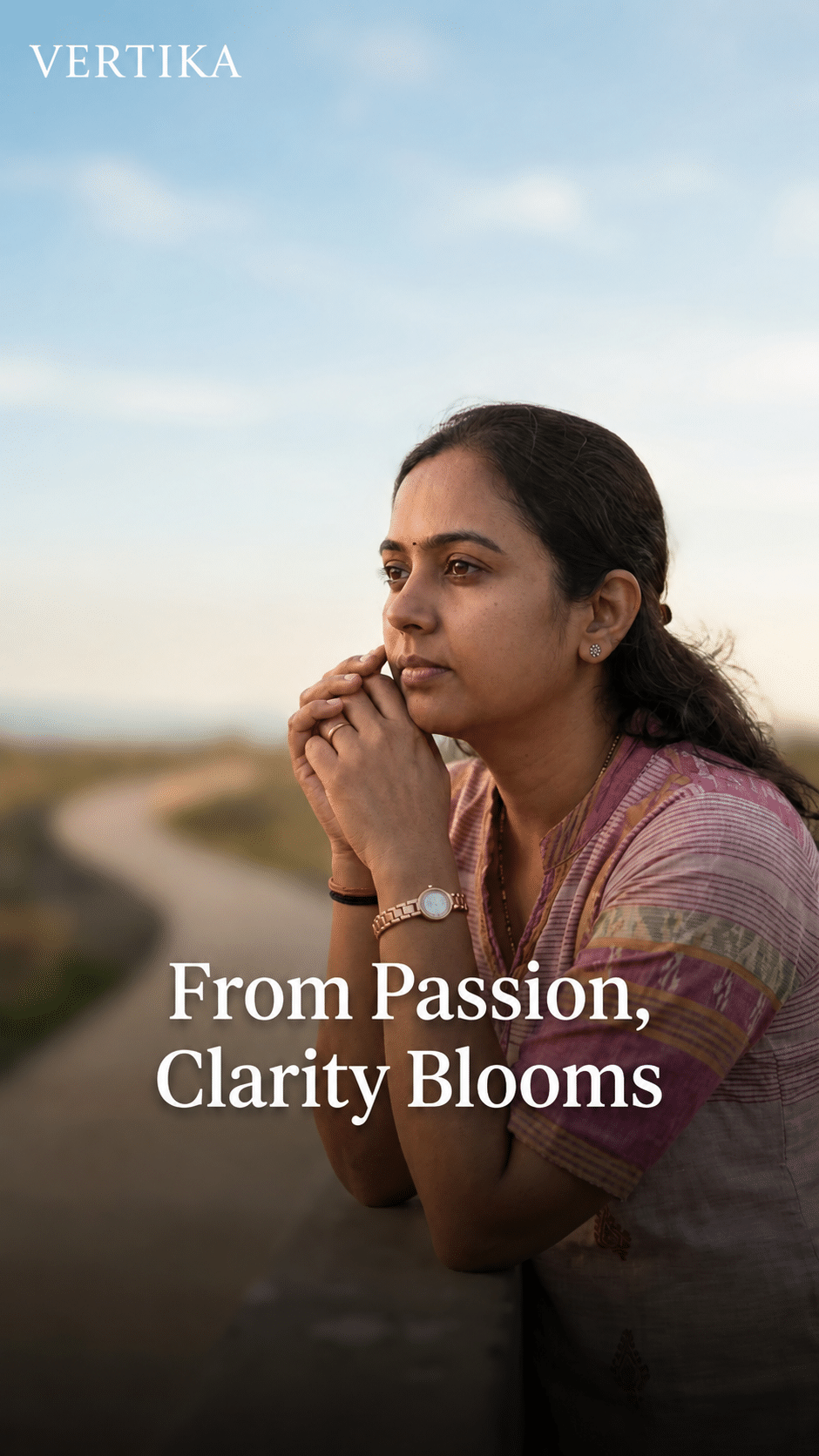
Clarity rarely arrives all at once. More often, it grows from the things we care about enough to return to, even when the path ahead feels uncertain. The words on this image, “From Passion, Clarity Blooms,” offer a gentle reminder: we do not have to know every answer before we begin.
Listen to what draws you in
Passion does not always look like a dramatic calling. Sometimes it is a quiet curiosity, a conversation that stays with you, or a problem you keep wanting to solve. Notice where your attention goes when nobody is asking you to perform. Those small moments can reveal what matters to you. Write them down without judging whether they are practical or impressive.
When life becomes busy, it is easy to confuse other people’s expectations with our own wishes. A little space to reflect helps us hear the difference. Ask yourself: What gives me energy? What feels meaningful even when it takes effort? What would I explore if I did not need to be perfect at it immediately?
Try keeping a short curiosity journal for a week. At the end of each day, jot down what caught your attention, when you felt engaged, and what left you drained. You may notice a pattern that a single dramatic moment could never reveal. A repeated interest in listening to people, making things beautiful, solving practical problems, or learning new ideas is worth exploring. Your notes do not need to become a career plan. They are simply clues about the conditions in which you feel more like yourself.
It can also help to separate the activity from the approval it brings. Ask whether you would still want to spend time on it if nobody praised the result. That question may uncover a quieter, sturdier kind of motivation. When an interest survives ordinary effort and imperfect attempts, give it room to grow. You can revisit it without demanding an immediate label or outcome.

Let action teach you
We often wait for clarity before taking a step. Yet clarity can be the result of a step. Try one small experiment: read about a topic, join a conversation, make something, volunteer, or set aside an hour for a project you have been postponing. Pay attention to how you feel during and after it. Each experience gives you useful information about what fits and what does not.
Progress need not be fast to be real. A flower grows through seasons of preparation that are mostly invisible. In the same way, reflection, practice, and rest are part of growth. If a choice does not work out, it can still teach you about your values, strengths, and boundaries.
A small experiment is easier to learn from when you decide what to observe. Before you begin, write one question: “Do I enjoy the process?” or “Would I like to learn more?” Afterward, note the answer and any surprises. You might discover that you love the subject but dislike the way you tried it. That is a reason to adjust the experiment, not abandon the interest altogether. The next step might be a different class, a conversation with someone who works in that area, or a quieter way to practise.
Think of this process as walking a path whose next bend you cannot yet see. You need enough light for the step in front of you, not a complete map. If anxiety about making the perfect choice stops you, choose an action that is reversible and modest. Ten minutes of reading or one honest conversation can teach you more than another week of imagining every possible outcome.

Make room for your own pace
Comparing your journey with someone else’s can make your direction seem less clear. Their timing is not a measure of yours. Give yourself permission to change your mind as you learn. You can care deeply about an idea and still refine the form it takes in your life.
For a simple check-in, choose one thing that matters to you today. Name one reason it matters, then choose one manageable action you can take this week. Keep the action small enough to begin. Afterward, pause and ask what the experience showed you. Repeat the process with patience.
There may be days when your interests feel scattered or your next step seems too small to count. Return to the question of what feels true for you now. Share your thoughts with someone you trust, or give them a page in a journal. Naming them can make a vague feeling easier to understand. The aim is not certainty in every moment; it is a more honest relationship with yourself as you move forward.
Growth is easier to sustain when it includes rest. If an interest starts to feel like another obligation, pause and ask what has changed. Perhaps you need a smaller goal, a different environment, or time away from constant comparison. Rest does not erase your commitment. It can give you the space to return with attention and choice.
It is also possible for two important values to pull in different directions. You may want adventure and stability, or creativity and security. You do not have to settle the tension in one decision. Look for a small way to honour both: a weekly creative practice beside steady work, for example, or a gradual transition with room to learn. Your path can hold more than one part of you.
When you look back after a few weeks, ask what has become clearer. Perhaps your goal changed, but your understanding deepened. Perhaps you discovered a boundary or found a new question. These are meaningful signs of movement. Like a bloom, clarity unfolds in stages, and each stage deserves your attention.

At Mind Mirror, we believe self-understanding can begin with an honest pause. You do not need a perfect plan to honour what matters to you. Follow your curiosity, take a thoughtful step, and allow your direction to become clearer with time. From passion, clarity can bloom.